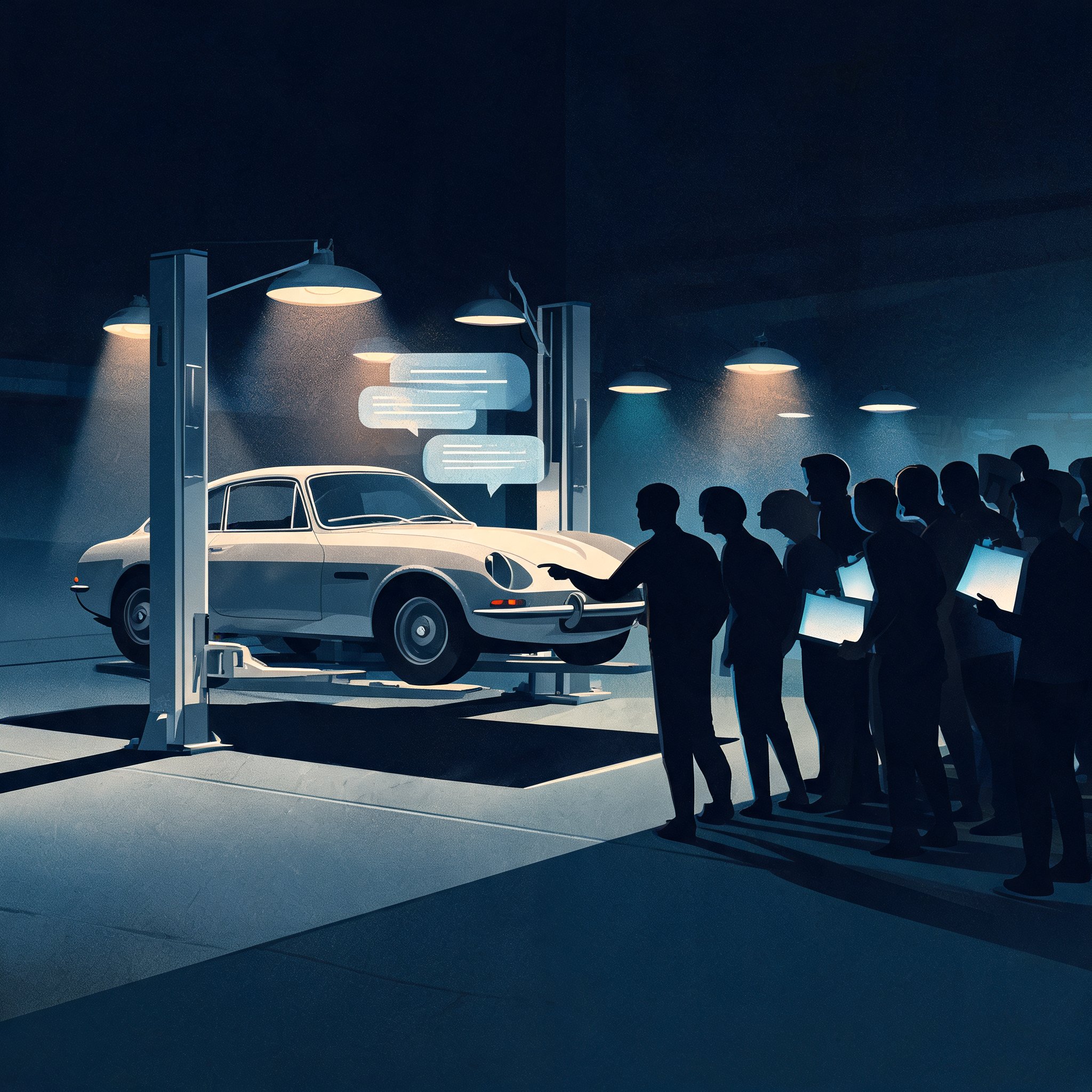
Bring a Trailer's comment section has become the auction platform's defining feature, its president said on The Drive's podcast, describing the community that gathers beneath each listing as what makes the site fun and difficult for rivals to copy.
Howard Swig, now president of Bring a Trailer, told The Drivecast that the business began in 2007 as a simple WordPress blog and online newsletter published during what he called the golden era of eBay and Craigslist. Founder Randy, he said, was hooked on hunting the internet for cars buried on classified sites and elsewhere, surfacing mainly eBay and Craigslist finds at a time when marque-specific forums were also at their peak. An enthusiast following formed almost immediately, and according to Swig the comment section soon became the "secret sauce" behind both the entertainment and the community element of the site — a differentiator he said still holds against competitors such as Cars & Bids.
A self-policing forum
Swig framed the comments as more than entertainment: he described the section as a self-policing force. The Drive's author, who sold a 1991 BMW E34 M5 through the site about a decade ago during its early auction days, recalled commenters immediately vetting the car — asking questions while one prolific member of the E34 M5 community ran the VIN and posted the full build configuration in the thread. That kind of due diligence, performed for free by people who know specific models and marques, is part of what the format offers.
Not the right venue for every seller
The public nature of the format does not suit everyone. Swig acknowledged that some sellers want privacy and maximum discretion, which a highly visible forum cannot provide. He drew a distinction between cars that need little explanation — a brand-new 911 Turbo, which he likened to a commodity where options and paint color are the main talking points — and older, complicated cars, such as an 80-year-old vehicle that has been damaged and restored several times with a mix of original and new parts. Those, he argued, are where the site performs best, and buyers value reading a week of comments before bidding. He noted the irony that buyers want a car with great history but no stories.
For sellers wary of public scrutiny, Swig said preparation matters. Listing a car with poor photos and unresolved issues while trying to answer questions mid-auction tends to produce a weak result, he said; doing the work beforehand — presenting the car properly with supporting documentation of the work performed — makes for a better experience and, he suggested, a better outcome.
Moderation and judgment calls
Comment moderation remains its own controversy, as on any online forum. Swig said commenters can act as first responders to major issues, and that the site keeps a self-policing system: profane or inappropriate comments can be removed, and community members can flag comments as not constructive, a mechanism in place since the early days. Some users are upset when flagged comments disappear, he said, though often that reflects other members' judgment rather than a staff decision. He compared moderation to an umpire calling balls and strikes — trying to be fair and stick to the site's values, while accepting that buyers, sellers, prior owners and commenters may each hold a valid view and that not everyone will be pleased with every call.
The result, as the article describes it, is a comment culture unlike most of the internet, closer to a spectator sport — the kind of audience that turns spending $87,000 on a 1992 Volkswagen GTI into a public spectacle.