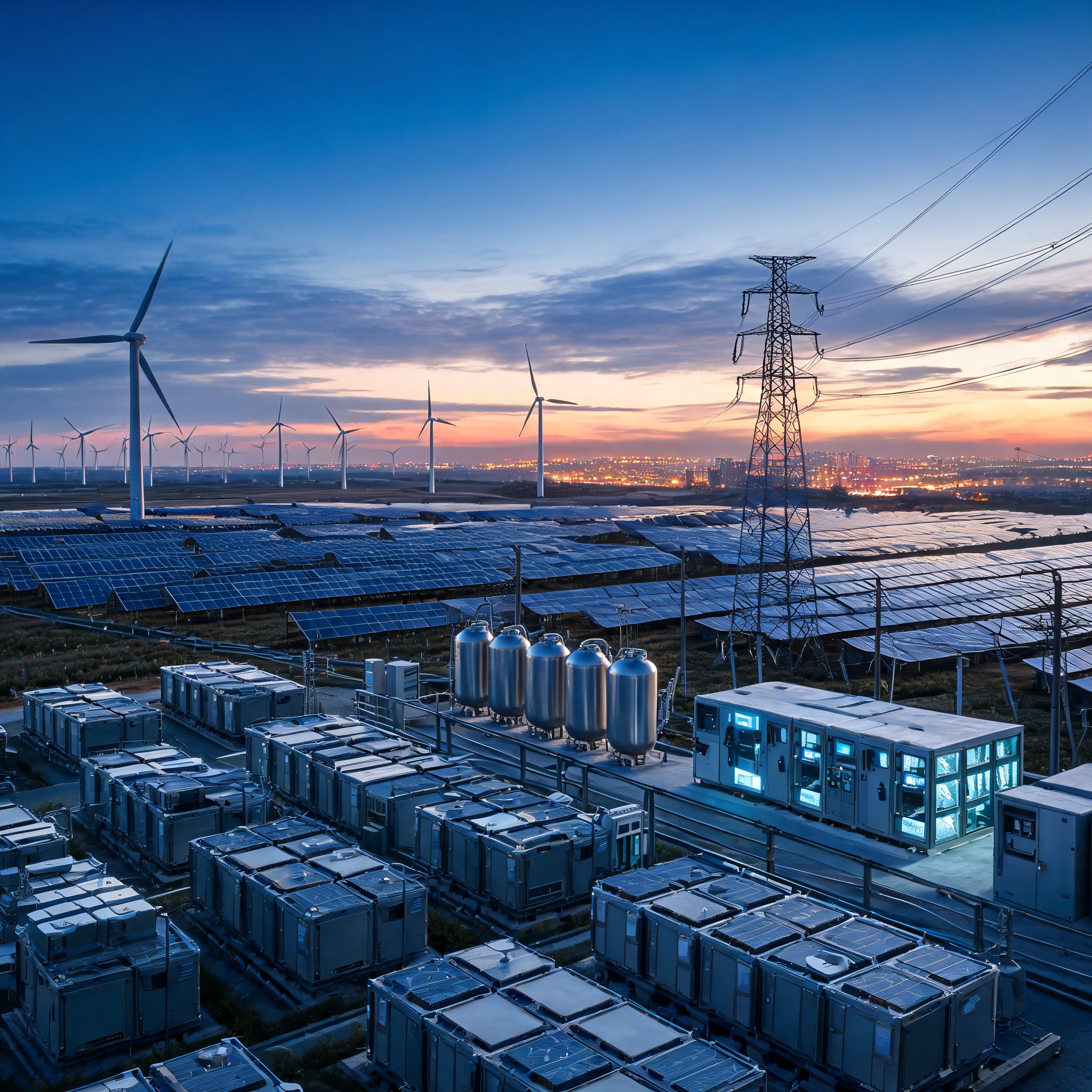
China's operational new-type energy storage capacity reached 167 GW/435 GWh at the end of September 2026, up 63% from a year earlier, according to National Energy Administration (NEA) figures released on October 30. The category includes electrochemical, compressed-air and other emerging storage systems, but excludes conventional pumped hydro. Against 135.93 GW/351.12 GWh at the end of 2025, the latest tally implies a net addition of about 31 GW/84 GWh in the first nine months of 2026.
The headline growth rate is only part of the signal. Average storage duration rose to 2.61 hours, about 0.27 hours more than a year earlier, while equivalent utilization hours reached roughly 915 hours over the nine months, about 10 hours above the same period in 2025. The NEA data therefore point to changes in system configuration and operation alongside installed capacity growth, rather than a simple expansion of the fleet.
Composition is shifting toward larger and independent projects
China's 2025 data showed that independent energy storage facilities accounted for 51.2% of cumulative new-type storage installations. Projects rated at 100 MW or above made up 72% of installed capacity, and systems with durations of at least four hours represented 27.6%. Lithium-ion batteries remained dominant at about 96% of installed new-type storage capacity, while compressed-air, flow batteries and other technologies continued to expand their presence.
Those shares matter because they indicate how storage is being positioned in the power system. Larger projects can be dispatched more centrally, while independent facilities are intended to operate as grid assets rather than only as attachments to individual renewable plants. The technology mix is still heavily lithium-based, but the data show that alternative technologies are gradually expanding their presence, even if they remain small in capacity terms.
Renewable growth creates both the demand and the operating challenge
China's combined wind and solar generating capacity exceeded 2.01 TW at the end of September, accounting for about 48.7% of total installed power capacity. As variable renewable generation expands, storage is increasingly needed to absorb surplus electricity, shift generation to higher-demand periods and provide fast-response grid services. The utilization figures suggest that the fleet is being used more intensively, but they do not by themselves show how much storage is needed for daily balancing, peak shaving or emergency support.
Policy has supported the build-out through government measures, technological innovation, industrial supply chains and growing demand for flexibility in the power system, according to the NEA. The 15th Five-Year Plan for power system development targets 300 GW of new-type energy storage by 2030, with greater emphasis on longer-duration systems, grid-forming capabilities and improved operational efficiency. That target is a plan, not a completed build; it nevertheless signals that the next phase is intended to be judged on duration, grid support and use, not only on megawatts installed.
That target implies roughly 133 GW of additional new-type storage between the end-September 2026 level and 2030, a little less than doubling the fleet, if the starting point is taken as 167 GW. The plan's emphasis on longer duration and grid-forming capability suggests that the composition of that additional capacity may matter more than the raw total. The September data do not yet show whether the average duration of 2.61 hours is on a path to significantly longer systems; the 2025 share of at least four-hour projects provides a baseline, not a forecast.
Market reform is meant to turn capacity into revenue
China has been developing arrangements that allow independent storage operators to earn revenues from electricity trading, ancillary services and capacity remuneration. The direction is significant because it gradually reduces reliance on mandatory storage requirements associated with renewable projects. If storage can earn from several services, it has more reason to be available and to cycle in response to system needs. The available NEA figures, however, do not quantify how much of the improvement in utilization came from market reform, technology choice, grid conditions or dispatch practice.
The western Inner Mongolia grid offers a concrete operational example. Its operator reported 20.23 GW/70.47 GWh of operational storage capacity in October. During emergency dispatch operations, storage supplied up to 12.25 GW, equal to 33% of the grid's electricity demand at the time. That is a short-term balancing contribution in a renewable-rich regional grid, not an average share of annual energy. It shows how a large storage fleet can provide substantial capacity when the system is under stress, while also illustrating why duration and dispatch rules matter as much as total megawatts.
What the latest numbers establish
The September data establish a large and still-growing fleet: 167 GW of power capacity and 435 GWh of energy capacity, with a 63% year-on-year increase. They also establish that average duration and equivalent utilization edged higher. They do not establish that storage alone solves renewable integration, nor that all installed capacity is equally available for every grid service. The distinction between power capacity (GW) and energy capacity (GWh) is central: a 167 GW fleet with 2.61 hours of average duration can deliver large short-term power, but its energy-limited role depends on how it is configured and dispatched.
For other countries expanding wind and solar, China's deployment offers experience in large-scale storage manufacturing, grid integration and centralized dispatch. The most transferable lesson from the latest figures is not the 63% growth rate by itself. It is that storage policy is moving toward independent, larger and longer-duration assets, with market arrangements intended to make them useful to the grid. Whether that transition delivers the intended operational and economic results will depend on detailed performance, revenue and reliability data that the headline capacity figures cannot provide.