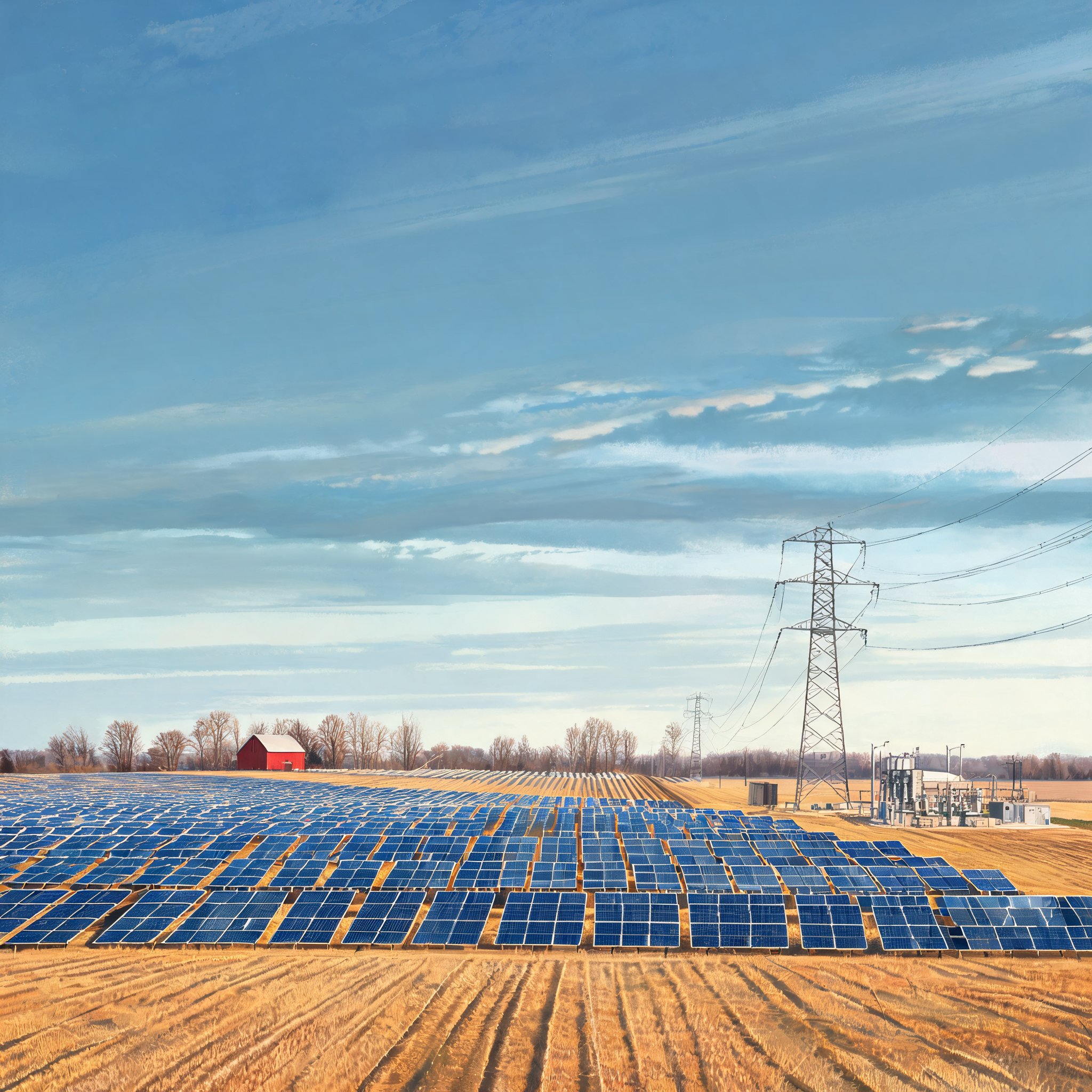
DTE Energy plans to add up to 150 megawatts of new solar generation in Michigan and has opened a competitive solicitation to pick the projects. The company said the additions would create construction jobs, support local communities and save customers money on fuel costs.
Because solar plants buy no fuel, DTE said the projects would also reduce its exposure to fuel-price changes over their operating lives. The utility framed the procurement as part of an effort to supply power that is reliable, increasingly clean and affordable.
What the solicitation requires
DTE is seeking proposals for as much as 150 megawatts of Michigan-based solar. Projects must be sited in the state and connect either to the MISO transmission system or to DTE's distribution system, and each must reach commercial operation by June 30, 2030. Bidders register through PowerAdvocate; proposals are due Jan. 19, 2027, and DTE expects to execute contracts in the second or third quarter of 2027. The 2030 deadline leaves developers roughly three years between signing and required operation.
Regulatory footing
The procurement supports requirements set out in the settlement agreement in Michigan Public Service Commission Case No. U-21662, which the commission approved on May 15, 2025.
Community and cost arguments
DTE cast the projects as an investment in Michigan and its communities. Producing more energy in-state from a resource that requires no fuel purchases, the company said, can help lower energy costs for customers and cut reliance on fuel brought in from outside Michigan. It also said the projects would create jobs and bring new investment and tax revenue to host communities, adding resources for schools, first responders and other services.
Those savings and local economic benefits are the company's stated expectations; the announcement carried no cost figures, savings estimates or independent verification.
Portfolio and long-term targets
DTE describes itself as both a producer of and an investor in Michigan renewables, and says its wind and solar fleet already generates enough clean energy to power nearly one million homes. The company is working toward net zero carbon emissions and says it will keep expanding renewables while holding a balanced mix of resources for reliability and affordability. Its 2026 Integrated Resource Plan calls for an additional 15 gigawatts of renewable energy by 2042 — a total the 150-megawatt solicitation would barely dent on its own. DTE has not said how much of that 15 gigawatts would come from solar rather than wind.
The announcement did not identify candidate sites, expected capital cost or the number of projects DTE hopes to select.