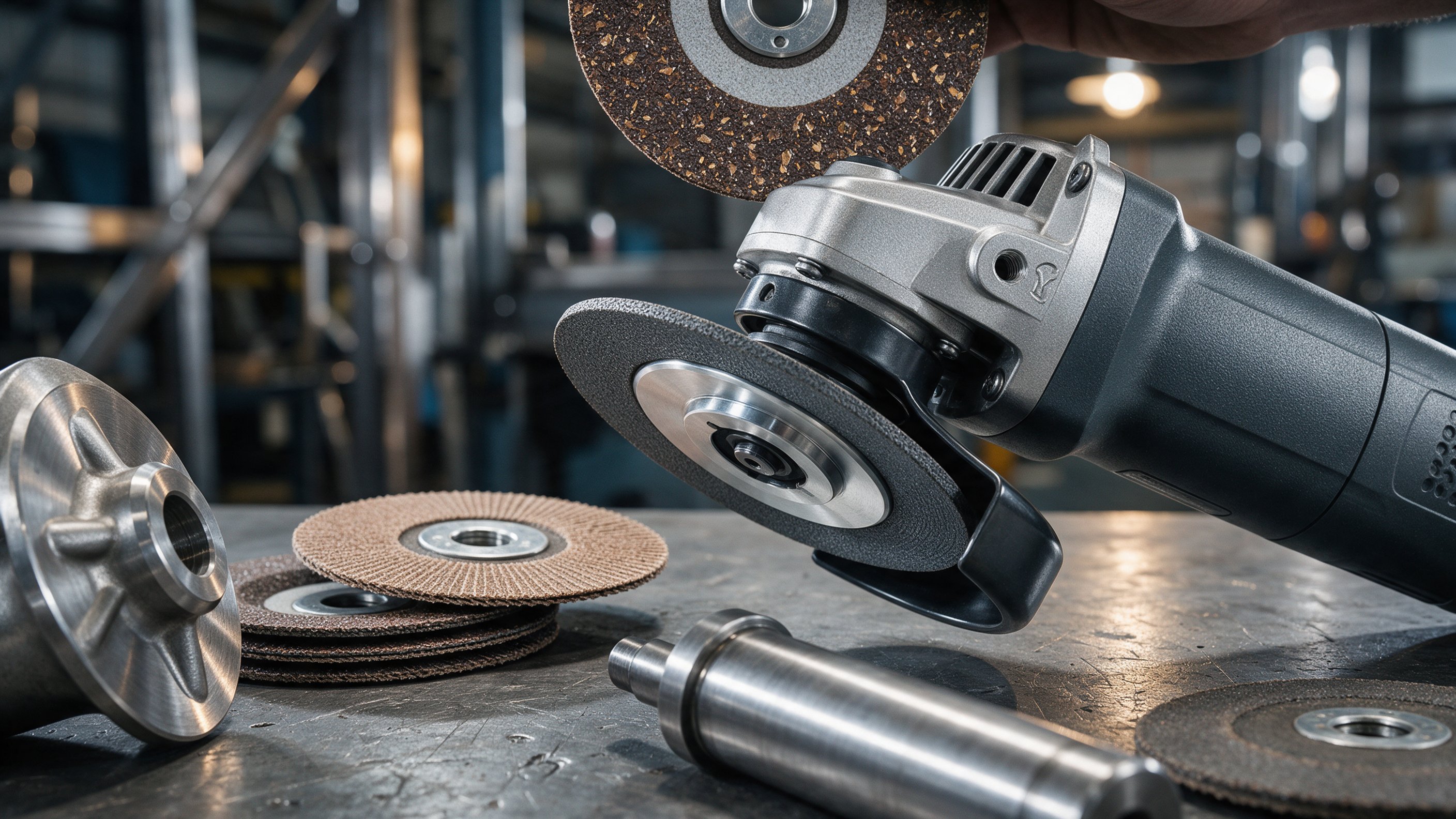
Klingspor Abrasives Inc. is highlighting a family of quick-change abrasive connections intended to reduce the time needed to replace discs during grinding, blending, cleaning and finishing. The company says centered attachment helps keep discs from shifting, while heat resistance and long disc life contribute to durability. Flat, contoured and confined-space versions are available to suit different part geometries.
Three connection designs
Quick Disc Connect (QDC) combines a heat-resistant plastic backing with Klingspor steel mandrels. A 1/4-inch-shank mandrel uses a T-lock that engages a channel in the backing plate and is secured with a quarter turn. SL 100 mandrels take 3/4-inch, 1-inch and 1-1/2-inch discs, while SL 101 mandrels take 2-inch, 3-inch and 4-inch discs. Small mandrels are intended to reach thin cavities; oversized discs can add flexibility around corners that might otherwise damage the mandrel or workpiece. Double-sided discs allow abrasive to be mounted on the reverse side for areas that are otherwise difficult to reach.
Quick Roll Connect (QRC) uses a male threaded hub that fits a QRC or compatible Roloc holder pad and tightens with a clockwise half turn. Quick Metal Connect (QMC) attaches by screwing onto the holder pad's threaded pin through an internal thread. Firm-density QRC and QMC pads are positioned for aggressive grinding and high stock removal, while medium-density pads are intended for contours and finish sanding. Backers smaller than the disc add flexibility.
Disc and abrasive choices
Standard coated QDC discs in aluminum oxide and zirconia range from 3/4 inch to 4 inches. Coated QRC and QMC options range from 1-1/2 inches to 3 inches, depending on the abrasive. Multiple grits allow users to match coarse removal or finer finishing.
- Aluminum oxide is described as preferred for wood and as an all-round choice for steel and nonferrous metals.
- Alumina zirconia is positioned for durable, aggressive grinding on steel and stainless steel, with lubricated versions available.
- Ceramic is intended for high stock removal on hard metals and for applications requiring aggression or longevity; lubricated ceramic is offered to help prevent heat-related discoloration.
For stainless steel, Klingspor says lubricated zirconia discs are often required, and ceramic use on stainless steel requires lubricated discs. Heavy-duty, scrim-backed nonwoven discs are intended for light removal and deburring. Light-grade Buff & Blend discs are described as producing soft scratch patterns and satin finishes, with multiple grades for blending, deburring and finishing.
Specialty discs and applications
Power Discs use compressed nylon fibers with embedded silicon carbide to remove rust, scale, paint and contaminants while leaving the workpiece intact. They are available with QDC and QRC connections, and 2-inch and 3-inch QDC discs can be used on smaller 1-1/2-inch backers. Mini flap discs combine removal and blending in restricted spaces, use QRC changeovers and come in alumina zirconia or ceramic abrasives at 2-inch or 3-inch diameters.
Unitized wheels use a compressed nonwoven abrasive web for matte-finish polishing, scratch blending, deburring and hard-metal cleanup. They offer QDC or QRC connections, aluminum oxide or silicon carbide grains, multiple grades and densities, and 1-inch to 4-inch diameters. Lower densities are intended for polishing and scratch blending; higher densities for deburring and cleaning hard metals. Flexible plastic bristle discs are designed for high-cut cleaning without damaging the workpiece or producing the flying wires associated with traditional wire brushes; they come in 2-inch and 3-inch diameters with 50-, 80- and 120-grit options.
Klingspor lists applications including aircraft turbine weld grinding, cleaning, component polishing and interior restoration on soft metals and steel. Marine users can change discs during fiberglass and gel-coat preparation, grinding, repair and finishing. Fabricated-metal work includes welding and polishing metal, stainless steel and aluminum in tight pipe, railing and staircase connections. Double-sided QDC discs are also intended to help autobody technicians reach difficult areas on sheet and hardened steel for smoothing, burr removal and weld-seam work.