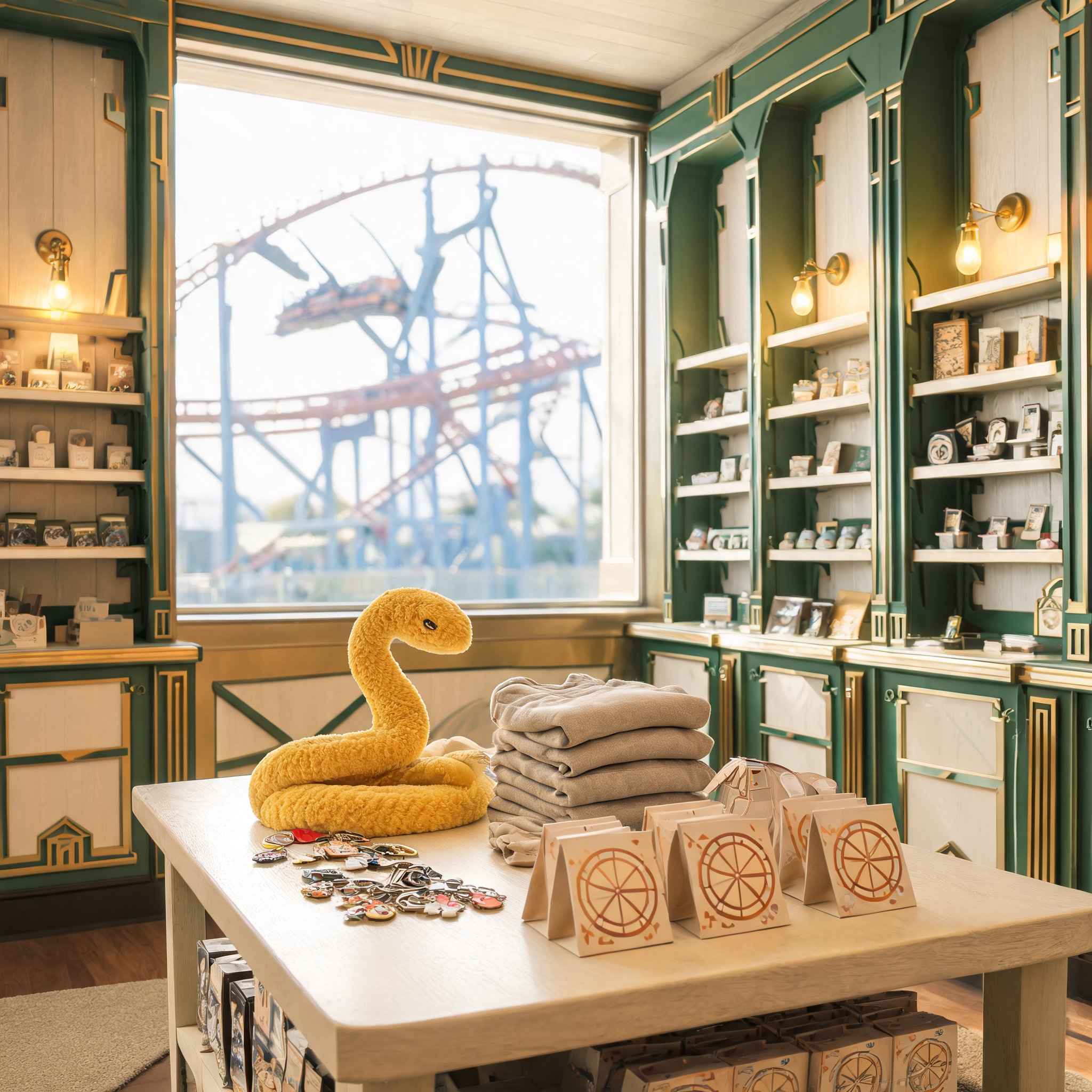
At 130 years old, Pleasure Beach Blackpool is best known for its seaside amusement park atmosphere, wooden roller coasters, the Big One and its shows. Less visible is the retail operation that supports those attractions. In an interview, Pleasure Beach head of retail Damian Jackson describes a merchandise strategy built around distinct visitor groups, carefully edited ranges and a belief that shopping should feel like part of the day rather than an obligatory stop at the exit.
Jackson oversees physical stores, e-commerce, ride photography and merchandise development. He works closely with Amanda Thompson from the initial idea through the design brief, product development, sampling and final approval. The guiding rule, he says, is that the resort does not simply put a logo on a product: every range needs a reason to exist, a clear customer and an authentic connection to Pleasure Beach.
Segmenting a diverse audience
That approach is necessary because the park serves very different guests on the same day. Families on a first visit, school groups with limited spending money, teenage friends and couples, international tourists, lifelong fans and serious roller coaster enthusiasts may all be on site. Their reasons for buying differ too. A family may want a traditional souvenir of the day; an enthusiast may want an accurate collectable tied to a particular ride; teenagers may respond to confectionery, accessories and trend-led apparel; and heritage-minded visitors may value nostalgia, craftsmanship and the stories behind the resort.
Pleasure Beach combines sales data with observation and guest feedback. Jackson says sales reports show what is selling, but understanding why requires time in the shops, conversations with teams and listening to visitors. The team asks whether a product is desirable beyond its logo: whether someone would wear it away from the resort, whether an enthusiast would display it, whether a child would be excited to receive it and whether it would genuinely remind a family of their visit.
The portfolio is therefore organised around customer missions, price points and levels of engagement. It includes accessible impulse purchases such as confectionery, magnets, keyrings and badges; practical items such as bottles, bags and ponchos; fashion-led apparel and accessories; children’s products and plush; and more premium or limited-edition pieces for enthusiasts and collectors. The resort also balances attraction-specific merchandise with broader Pleasure Beach branding, licensed ranges, playful products and heritage collections. Jackson argues that offering something for everyone does not mean unlimited choice; it means a carefully edited range in which each product has a purpose, a target customer and an appropriate price.
Aviktas and the case for early involvement
The Aviktas range is Jackson’s example of merchandise developed alongside a new attraction rather than added afterwards. Instead of treating the range as a set of products carrying the ride logo, the team built it around the attraction’s visual world: its golden snake, emerald colouring, mythology and sense of mystery. Jackson says this shows the benefit of involving retail early in attraction development, when merchandise can form part of the original creative conversation.
The commercial test came with a premium limited-edition run of 50 models priced at £250 each, which sold out. Jackson presents this as evidence that there is a market for premium collectables when a product has authenticity, detail and a strong connection to the attraction. The example is narrow, but it illustrates the logic: exclusivity and narrative can support a higher price point than a standard souvenir.
Heritage, play and licensed brands
Different attractions call for different creative treatments. Jackson says ICON lends itself to a clean, contemporary, fashion-led approach, while heritage rides such as the Big Dipper and Grand National allow the team to draw on archive artwork, engineering details, nostalgia and generations of guest memories. Quality and attention to detail cover materials, colours, proportions, trims, embroidery, packaging and even how a product will be presented in the shop. Commercial fundamentals—intended customer, expected demand, price points, production quantities, lead times and sales locations—are considered alongside the creative work.
Nostalgia is central because the resort has been part of family traditions for 130 years. Its archive of attraction imagery, typography, posters, architecture and stories can be reinterpreted through contemporary apparel, homeware and collectables. Jackson says the aim is not to make everything feel old-fashioned but to use authentic history in a fresh and desirable way. Playful assets are also part of the mix: humour, colour, character and unexpected ideas can engage children, families and casual visitors, and keep the retail identity broader than a collection of ride logos.
Licensed attractions, including Nickelodeon and Aardman’s Wallace and Gromit, require partnership between Pleasure Beach, the IP owner and approved suppliers. Jackson says the strongest relationships are collaborative: the licensor protects the brand while the park explains what visitors respond to and how products need to work in an attraction environment. To compete with general online retailers, Pleasure Beach aims for relevance and exclusivity through exclusive designs, attraction references, location-specific details, personalisation and products that celebrate the visit itself.
What customers want—and what retail still requires
Jackson says guests increasingly ask for products that feel exclusive, authentic and considered. Interest is growing in attraction-specific merchandise, premium apparel, subtle branding, collectables, limited editions and items with a clear story. There is also more demand for merchandise that can be used or worn beyond the visit; a hoodie, cap, bottle or bag has to work as an attractive product in its own right. Generic souvenirs and heavily branded products without an additional story have become less compelling, though keyrings, magnets, mugs and confectionery remain important and must continue to evolve in design, quality and presentation.
The less glamorous side of retail is equally central. Jackson identifies stock accuracy and product availability as critical: a strong product cannot generate revenue if it is in a stockroom, has not been reordered, is incorrectly priced or is unavailable where guests expect to find it. Accurate deliveries, stock movement, replenishment, pricing, signage and daily compliance checks protect the guest experience as well as sales. Suppliers are treated as creative and commercial partners, with reliability in quality, communication, lead times, compliance, pricing and consistency. Sales are also supported by clear price architecture, product adjacencies, staff who can explain a range and services such as gift wrapping and personalisation.
E-commerce extends the relationship beyond the physical visit, letting enthusiasts follow launches, former visitors reconnect with memories and people who cannot travel to Blackpool buy selected products. Online behaviour can also provide insight into demand that differs from in-park purchasing. For Jackson, the broader goal is to make retail feel like another chapter of the day. That requires considering retail during attraction, event and guest-journey planning, and making each shop reflect its location—whether beside a major thrill ride, in a children’s character store, in a heritage collection or in a confectionery outlet.
The Pleasure Beach case suggests that retail works best when product, place and story are planned together. It also shows the limits of that approach: curation only converts if stock, pricing, staffing and presentation are reliable, and not every range can or should be premium. Jackson’s account is an operator’s perspective rather than independent proof of park-wide returns, but it makes a clear argument: merchandise can extend an attraction’s identity if it is treated as part of the experience, not as an afterthought.