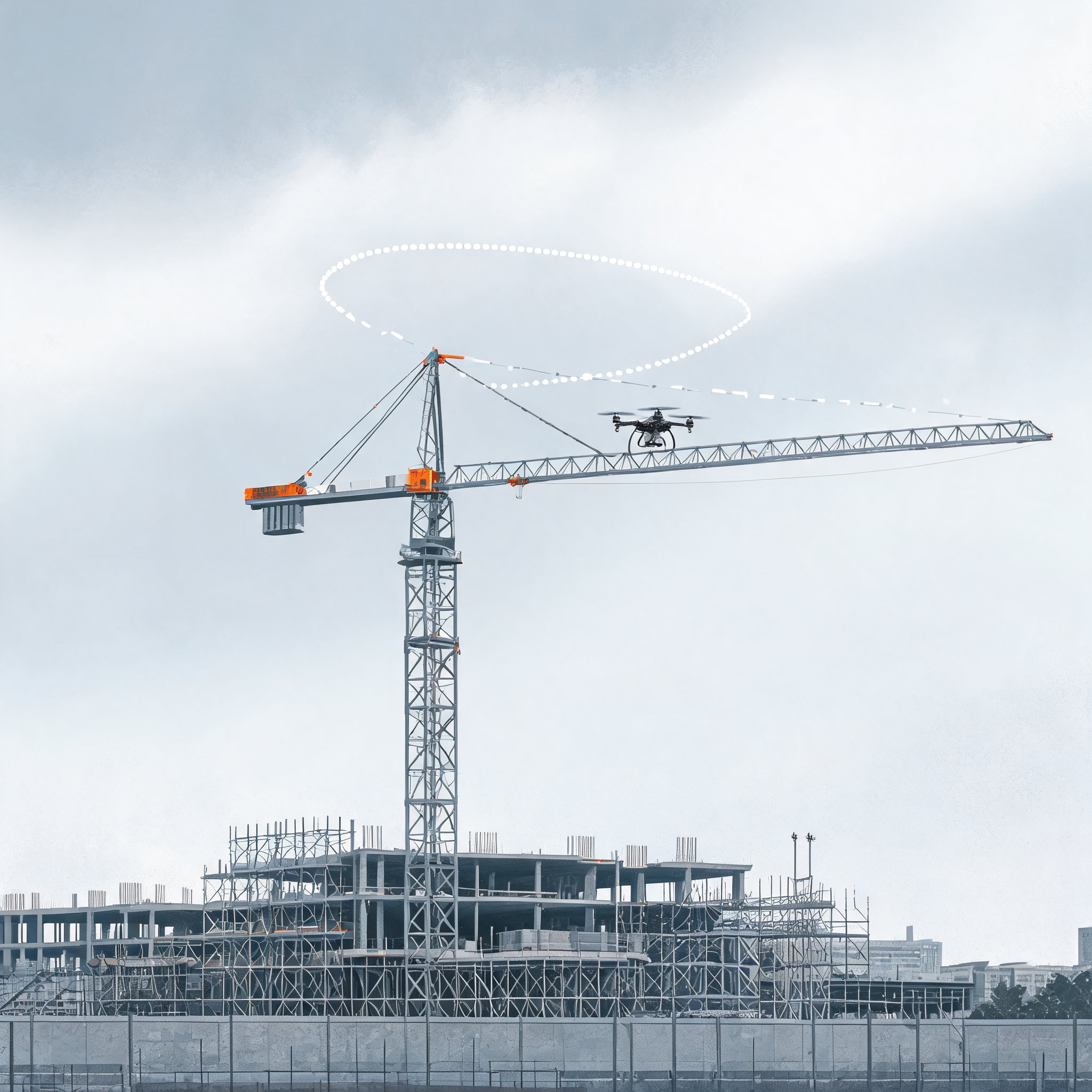
A drone carrying out an aerial survey collided with the top of a tower crane at a construction site in the Cheetham Hill area of Manchester in August, according to the Air Accidents Investigation Branch.
The occurrence was reported to the AAIB and recorded in its latest bulletin. No formal investigation was opened, and neither the site nor the contractor has been identified.
According to the bulletin, the unmanned aircraft was following a pre-selected flight path to survey a construction site in an urban area. Its obstacle avoidance feature was enabled at the time, but the aircraft still struck the top of the crane and dropped about 120 m to the ground.
The construction company's own internal investigation found that the firm and its remote pilots might not have fully understood the limitations of the obstacle avoidance software, the bulletin states.
Automated avoidance under scrutiny
The account touches two routine practices on construction sites: pre-programmed survey flights and reliance on automated collision avoidance to keep the aircraft clear of structures. The bulletin does not explain why the software did not prevent the contact, nor does it describe the outcome of the fall in terms of damage or injury.
Because no formal probe was launched and the parties were not named, the bulletin contains no regulatory finding or enforcement outcome; the explanation of what went wrong rests on the operator's internal review rather than an independent assessment.
The case nonetheless illustrates a practical point for site teams commissioning drone surveys: enabling an avoidance function is not the same as confirming that pilots understand what it can detect and under which conditions it may not intervene.